Scuba diving is one of those things in life where the less you know the technology about it the safer you feel. By its nature scuba gear has to be relatively dangerous. You need to be able to support a human 40 ft under the water (an environment that humans are unsurprisingly not meant for by nature) for a long period of time (god definitely didn’t design us for that) while still maintaining light enough to take photos, swim with seals, or do scientific work (which is still clunky as hell).
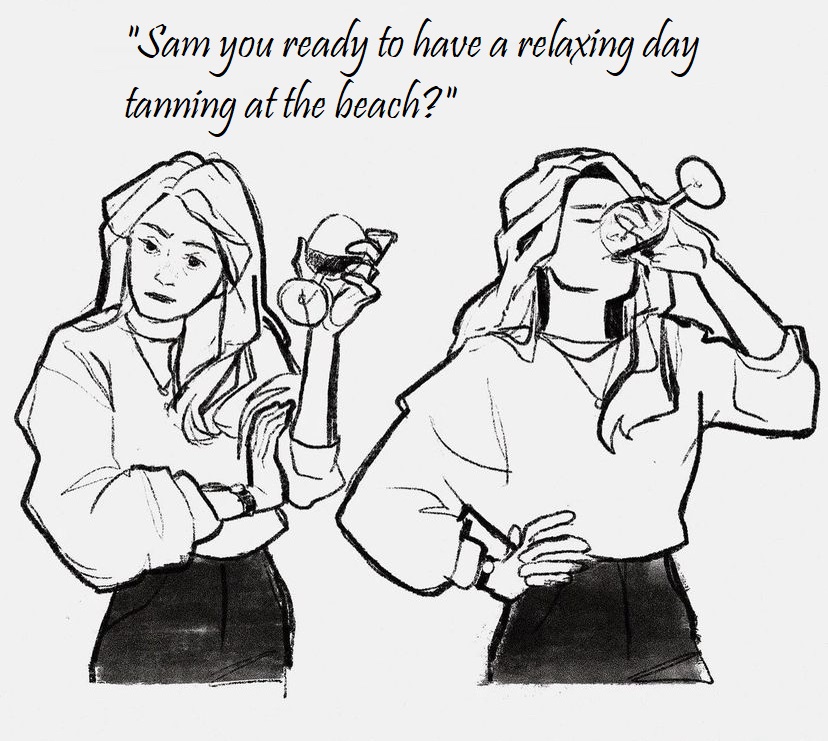
I also tend to just be a naturally anxious person. Nothing bad enough to get diagnosed (or probably not, damned if I ever found the time for that), but I do worry about things. Partially because I tend to have exacting standards for myself. Partially because my intentions tend to be rather unhinged and as Anna pointed out things “tend to explode around me”. But I’m here to talk about the unreasonable, unhelpful kind of anxiety! The kind that stems from spending 14 hours in a day staring at your computer and coming up with increasingly horrible ways for the trip to the beach your friends are taking you to.
I certainly have that. I have anxiety about people finding me inadequate, not particularly funny, or overall unpleasant to be around. Anxiety about my career and if it will all be worth it. Anxiety about where I’m headed in life. Look this isn’t uncommon for any young person born into a world that is changing before our eyes thanks to the internet faster than ever. Both in good and bad ways.
What I do offer however is times when I’m not anxious. Everyone has their ways of coping. Mine just has a fun theme.
I tend to never be anxious while scuba diving. My favorite definition of anxiety is the idea of a really damn slow tiger chasing after you. Now I know next to nothing about psychology or that field of science in general but largely anxiety comes from the fact that human mental evolution has certainly not caught up to how most of us live our lives. Anxiety stems from that fear of death when there isn’t a good reason to be scared of dying.
So funny enough my anxiety disappears when there is actually a risk of me dying. In scuba gear, this is a ubiquitous part to engineers called an O-ring in a few key components. These are rubber rings that self-seal and provide a pressure and material barrier. We use them for tons of things: Everything from sealing gearboxes to not piss oil to keeping fridges cold by creating seals. But they also break. A lot. After all, they’re pretty simple pieces of rubber responsible for completely reducing flow and making sure it doesn’t go off and do something you don’t want. Doesn’t take much for them to fail under the load cases they see.
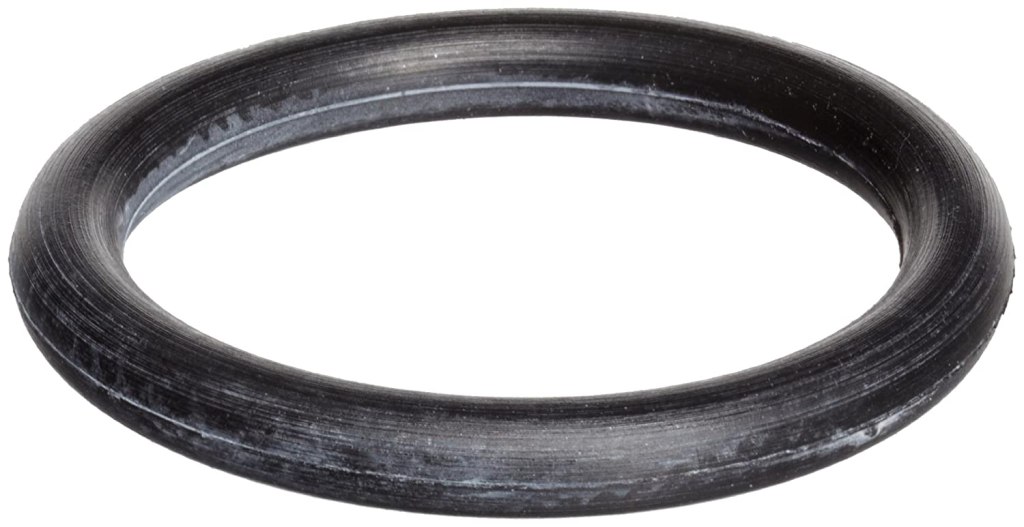
If you’re concerned about how many of your mechanical devices these keep together. I’d suggest looking further into the matter
Now sometimes such a failure sucks but is fine. The baja gearbox pissed oil to the point where another team put a “Deepwater horizon” sticker on our gearbox when the seal failed. The food in your freezer might go bad. But the space shuttle Challenger exploded, killing all 7 on board, because of both a main and redundant o-ring failure due to temperature. They cracked and superheated gas flowed through and melted the support beams of the shuttle from within. And if your o-ring in your scuba regulator fails, your oxygen supply is going to be disrupted. Which tends to increase your overall chances of suffering a case of terminal death.
“So get rid of O-rings?” After what I just said why the hell would you design critical space shuttle or scuba gear components to rely on it? The answer comes down to the best option available. Other solutions are either too heavy to be practical or too complex to the point where the complexity makes them even more likely to fail than O-rings.
Oh and while this is a high-profile part, there are roughly a dozen ways for your scuba gear to fail on you. Rapidly and suddenly.
That’s not to say all you can do is make your peace if your O-ring pops. You keep a backup regulator on hand. The human body can easily ascend 40 feet without dying of the bends in a few minutes (which you hold your breath for). If there is literally anyone else with you you can share oxygen while making an ascent.
(One of the many reasons if you dive alone you’re either an idiot or have a death wish).
There are solutions. Not fun ones. Ones that require you to think. And the consequence of failure is death. But in these scenarios where such failure options are a reality my anxiety goes away. After all, my attention is working on making sure my damn o-rings still work. These seem to be the environments that my anxiety was designed for. Encouraging paranoia and ugly what-if scenarios because considering them could actually save my life. I’ll be anxious sitting off the side of a helicopter as a passenger but fine rewiring high voltage cables. In one of those scenarios, I can have an impact on my survival.
This is also not to discourage you from scuba diving at all. In fact, I think it’s one of the greatest things I ever learned to do. And all things considered, I’m a novice at it. I’ve never done open ocean dives, dives lower than 40 ft, or dived in a low visibility area. Done right, it can be safe (even if not incredibly safe) and show you a whole world you thought you knew. If you thought life on the surface can be wild: The world underneath the waves is more alien than most aliens I see in media.
With that being said: there are two dives I would never agree to cave dives and shipwrecks. Why? Because they are actual deathtraps. Now true cave and shipwreck divers will contend that it isn’t dangerous because almost everyone who has died has gone out because they were either barely trained/a novice or had extraordinarily bad luck. But that’s kind of the problem, isn’t it? Last I checked a lot of life is being able to roll the dice of fate and then deal with the consequences. But if you roll bad enough and then straight-up die, I’m not going to say it’s safe.
So it’s fun to draw a distinction between these three dangerous things I just mentioned. First, you have the terrifying and scary but not actually dangerous. A holiday party with people that you know but don’t know all that well and there are a few you still have to impress. That sort of stuff induces anxiety in me. Second is the actually dangerous but manageable and most importantly has to be managed by you which takes most of your attention. This causes little anxiety to me. Lastly, there is the stuff that is actually dangerous. Diving into a shipwreck where a piece of rusty metal could be unseen and then cut your line while preventing a quick ascent is terrifying and anxiety-inducing even if you’re doing everything you can. The kind of work that causes your hands to shake even as you push forward. After all, you only get so many rolls of the cosmic die.
So what’s the point of this probably unimpressive realization? At least for me personally it’s that I need to do a job that involves some risk to me. Doesn’t need to be much or even physical danger. But there needs to be at least some consequence of failure that could lead to a problem. Could just be “This design doesn’t work”. But I certainly cannot work a job that depends on the everpresent fear of my boss or customers judging me. Or appearing like you deserve to keep your job. Office work 100% of the time for me is probably not in my near future.
(If anyone cares for what I want to do in a perfect world: It’s logistics and R&D. Two things that require interacting with physical crap on the regular.)
I don’t want to have to get rid of anxiety in my life through expensive hobbies and spend weekends just trying to counteract what I do 40 hours a week. I’d prefer to learn from what an Alaskan mountaineer told me when I was 15. “Do something that you at least see the value in”. I also wish more people could try what I do. Again, I don’t think my idea is particularly unique or inventive but I think people shy away from anything with the slightest chance of boom. Not that I’m better than anyone else, it just comes from my environment. I had the chance to have older figures in my life who understand the idea of “some risk in a controlled environment” is important.
Or hang out with some O-rings that fail and get covered in grease. That’s pretty fun too.
 Dead Man Travelling