6/2/14 to 6/6/14 – Amsterdam – The Netherlands
Crew – John Orta, Gigi Orta, Lily Orta
I find it deeply disappointing that I travelled to Netherlands before I developed my unhealthy interest in hydraulic engineering: After all the Dutch invented it.
The majority of Holland lies below the sea level, creating a glaring issue that the country can become part of the Atlantic Ocean if nothing holds the water back. In response the Dutch in the 15th and 16th centuries spent vast sums of money to build massive stone dams to hold back the water.
Then they realized that the dams provide a fantastic way to irrigate crops. You build a dam that can be opened when you want to water the fields and plant strains of crops that can take an immense amount of water, no manual effort spent watering! For context the rest of the world would adopt this tactic in the mid-20th century in the second green revolution, three centuries later.
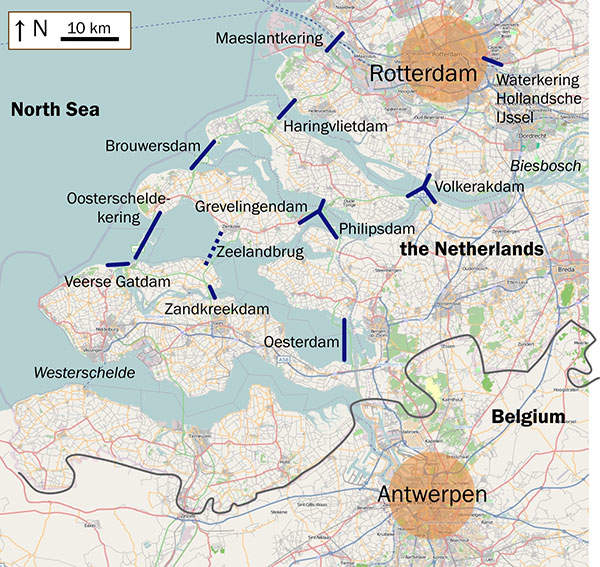
Even better an army wants to invade the Netherlands. Good luck! The Dutch can simply open up their dams and flood any path that an army might take. This would make the only passable path the main stone road leading to cities. That main stone road of course had to be elevated to not flood meaning any army that dared use it would be an unmissable target to any defensive army and any strength of numbers would be useless. The roads simply were not large enough. This would continue to be a problem up until the most previous war in the Netherlands: WW2. Operation Market-Garden: The allied liberation of the Netherlands, failed partially because it was impossible to safely advance on the elevated roads at the speed required.
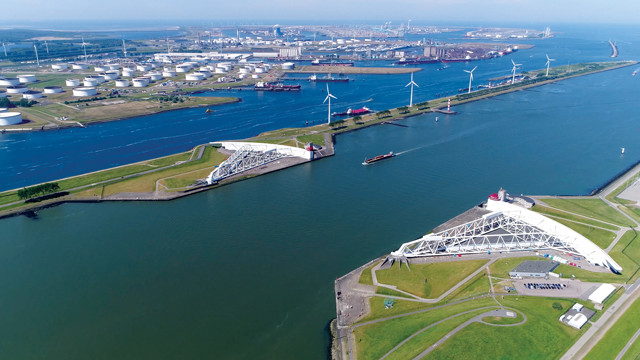
Going even further: To fund these dams required huge sums of money and the Netherlands throughout the middle-ages were not a unified nation. Rather a series of dukes and duchesses that ruled small kingdoms. Instead, many of these rulers stepped forward to fund the projects and utilizing merchants who gave up their gold for a share of the power, put the balance of power in the hands of those with capital. The 17th century roles around and an oligarchical class of merchants rules the United Netherlands. They preferred to not bloody their hands in war, after all no one could attack them. Instead they focused on trade, becoming a huge power on the global stage with frightening stage.
The Dutch East India Company came out of this. Valued at an astonishing $7.9 trillion dollars in today’s money, they are by a degree of magnitude the largest company to ever exist and the first truly global company. Based out of Amsterdam, it quickly became a sprawling port city.
Of course it was not a utopia. The tulip-mania craze where the markets in Holland valued tulips more than houses led to a spectacular crash of the entire economy and brought half of Europe with it. The Dutch East India Company ran a global trade industry in many ways propped up by slaves and war crimes. Furthermore, the country failed to capitalize on this and becomes marginalized in the 18th century and onwards by Britain, France and even Germany.
Holy shit I just went on a one page tangent about the Netherlands before I even got to my experiences. But I think its an amazing story in history and helps set the background of the country. This country lacks the violent and unstable history of England and France.
It also meant that Amsterdam was severely overbuilt in the age of enlightenment and for all the talk coming out of philosophers and absolute monarchs they did not ask a single civil engineer to design their city and therefore everything has been build going up in the past centuries. Our apartment upon landing was four stories up such a steep set of stairs that our suitcases got continually stuck trying to get up it.
Coffeeshops were jammed into coffin sized rooms and restaurants had winding paths to larger rooms. Something I’ve learned from living in the Midwest is that Americans really like rectangle houses, because why not we have the space for it and it seems the most naturally intuitive. The Dutch had no such qualms playing Jenga to fit the most possible use out of a square meter.
Rain. Everywhere. Welcome to Northern Europe! Much like England, the country was not known for its weather in any way, shape, or form. The winding streets and overcast rain really gave it a great dystopian Mistborn vibes if the people were any meaner. Turns out they weren’t, all spoke English, and were used to idiot Americans wandering around.
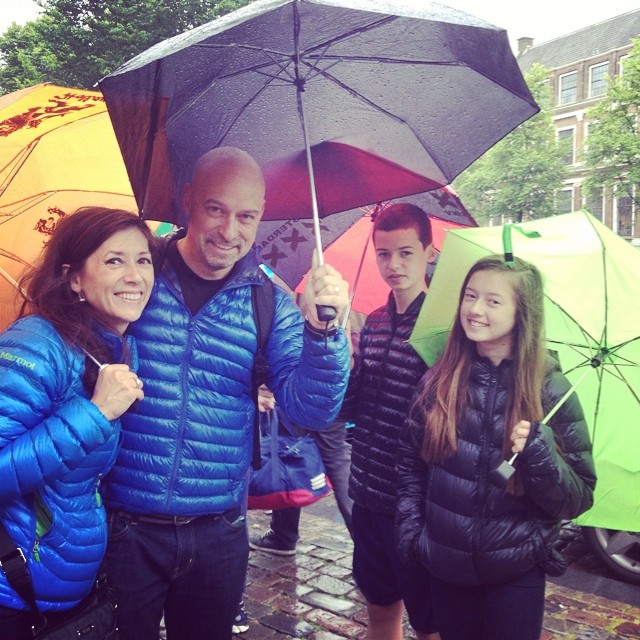
(Sidenote but if you want a city that has the vibes of a Mistborn novel, try Seattle).
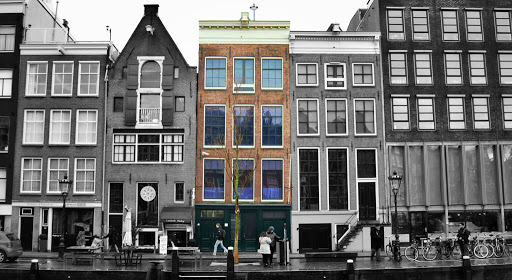
The pouring rain was not about to stop us from visiting one of the largest reasons we came: The Anne Frank house. If you don’t know the story of Anne Frank, go click this link and read up on it. I would also recommend the book. I assume that most people know this story, but you never know I’ve met STEM kids who didn’t know about the military-industrial complex.

The house has a long-waiting time. The living space after all was not large and the rest of the factory has been converted into a museum by Otto Frank. The only surviving member of the nine, he sought to make sure the holocaust was not forgotten. Of course, his daughter’s work which he published has become most likely the most read literary work about the holocaust. It’s also commonly used as the introduction to the holocaust. The second most read novel (according to Brittanica at least) is Night and its far more blunt with the full weight of the holocaust.
The museum contains quotes from her book in the area she was referring to. Furthermore, near the exit it has a guest book, where any visitor can write down their thoughts. Any person can write down and I’m sure the books fill up quickly. Next to it there are the most famous thoughts. Dutch leaders, Nelson Mandela, Obama and even a German prime minister
If you want to hear me talk about sports more in my life, go read my Germany post. Since this trip was directly in front of Germany, the world cup was also happening, and the Netherlands had reached the semi-finals with the Germans. The Dutch were set to play against the Argentinians. The bar was quite nice (significantly nicer than the German one) and we bought bandwagon sports gear. However, fate was not on the side of the Dutch this time and they lost. Bar might have been fancy but people were sad. Not much more to say.
No trip would be complete to Amsterdam without seeing the red-light district. Yay for brothels? My parents were adamant about taking Lily and I to see it. I am normally uncomfortable about telling my parents when I am even in a relationship, much less details of it. They discovered two of the High School ones over a month into it, and only because one of my siblings finally let up and told them. God forbid they ever hear about the college ones. I found the experience incredible awkward and mostly looked at the rocks below my feet. Would not recommend seeing with your parents. As for the actual value…. I do not know, although the cobblestone was of high quality if a bit worn down.
On a note of more comfortable vibes… The Dutch had a work life balance that meant that an adult did not exist to work, rather they worked so they had money to enjoy life. This is not a particularly innovative idea in Europe (although the Germans beg to differ), but it does change by country. According to my sister who did a French study abroad for six weeks, they prefer to spend all their time at their homes with their family and in extended dinners. That is great: I can’t comment on it. But the parks of Amsterdam around 5 pm everyday were filled with families and couples either having picnics, playing, or just enjoying the outdoors. This would continue until around 8 pm and then the crowd would begin to disperse but even on the nights where we returned at 11 pm, you could still see teenagers and young adults in the parks.
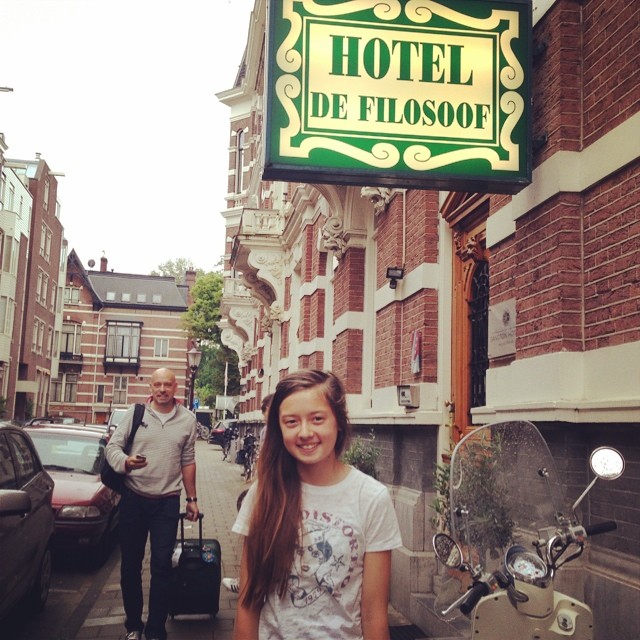
We did see the hotel from the Fault in our Stars! Lily was very adamant about seeing that hotel and to be fair it was a cute hotel.
The last museum I remember us visiting was the resistance museum to commemorate Dutch resistance fighters in the second world war. They did critical work liberating Europe by providing critical information to the allies and by being an absolute nightmare to deal with. Considering that the threat of any sabotage was death, they deserve more credit than they received. The museum also covered those who collaborated with the Axis powers and why they did so, often illustrating the perspective that would draw someone towards that decision. War is far more grey than black of white. The museum highlighted heroes in the light they deserved while showing how the villains were often just victims in a mature way.
It’s a shame that we did not have enough time to visit the rest of the country at all. Apparently, the countryside is beautiful as well as the other cities. My favorite twitch streamer (Yes, I hate that statement too but he is Dutch) likes to joke that Amsterdam is the worst part of the Netherlands because it hides the variety of the Netherlands underneath one city. I suppose I’ll add the rest of the country to my ever-growing list of places to visit.
But to give a final review of the city: It’s a great place with not a clear theme. Most cities have some sort of vibe or niche that they occupy. For example Berkeley California is the liberal capital of the world to the entire United States while having a top class University and atrocious rent. Tokyo is the high-tech night life city of Japan. Paris is the artistic capital of Western civilization according to themselves. But Amsterdam fails to fall into any category.
Sure, it is a tourist city, but more importantly it is the capital and economic center of the country. The urban design dates back centuries, significantly predating Paris, but it emerged an industrial era powerhouse. It is a country known for cute boots (cogs) and decent sports, but it once sported the largest company to ever exist that was known for less than altruistic actions. Finally, it sports a fantastic family environment and work life balance in parks and yet operates the red light district that all other ones are named after. So in reviewing this city, it’s certainly worth seeing. But what you are seeing, I leave that up to other people. I’m still working on that.
Sam’s Sermon Scales:
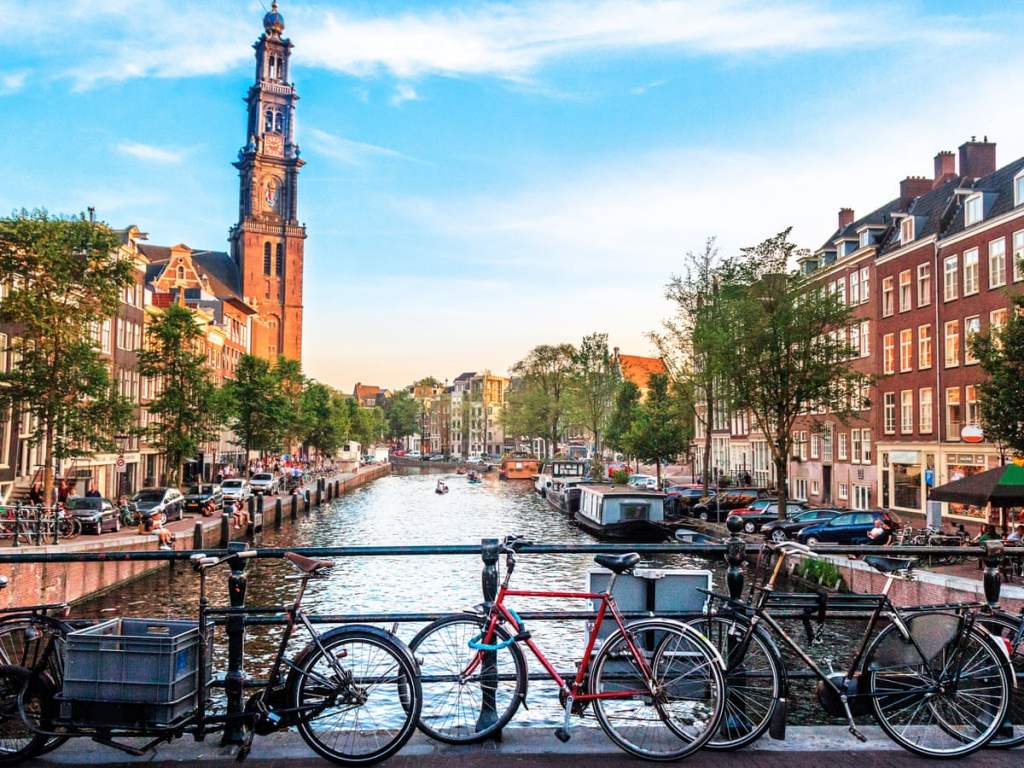
West Oakland BART similarities? – Unknown. Gloomy? Dark? Crowded? A hodgepodge of architecture? Yes, to all those things. But also beautiful, homey, and radiated thousands of years of history. While it was not the cleanest city I have ever visited, it was also quite welcoming. It had plenty of tourist attractions, but still felt like a living thriving city first off. The city was a paradox, not a bad one, but a paradox, nonetheless.
“I could make this better!” – 9/10. The Dutch East India Company became famous for their tea and coffee. Many of the shops in Amsterdam existed for centuries. If I ever go back, I need to spend more time in the shops.
Folks of Culture? – 7/10. Besides the Ann Frank museum (which is a huge “besides”) and a few random attractions the city did not pride itself on its rich history. If anything, they undersold it.
Golden Hour Opportunities? – 7/10. Beautiful tulip fields and architecture but we never left the city bounds so its unfair to judge the beauty of the country based off its largest city. This score is relatively arbitrary.
Did the vegetarian starve? – N/A. I wasn’t a vegetarian yet! This trip happened nearly a decade ago at this point. The food however was quite good if standard European tourist fare.
“Hey boss, can I work more hours?” – 6/10. We were not ripped off but it’s a European country that is quite used to tourists. The entire trip was definitely not a steal.
Cooler than Middle Earth? – 7/10. Look I love my hydraulics and farming. I had to cut myself off from rambling about them more. But overall, the paradox of Amsterdam I mentioned comes back here. It’s hard to decide because the city seems so unfamiliar and comfortable at the same time.
At the end of this this leg of our summer Europe trip, we boarded a train to head to the city of Hildesheim, Germany. I’ve already written about the 2nd leg of our trip in detail in an earlier post. I’m sure I’ll get around to Czechia one of these days. Either way the European countryside was green and peaceful in the summer and I had a sandwich, which is all I really need in life.
Photo credit goes to my parents and the Ann Frank museum
Best,
Sam
 Dead Man Travelling